A MESSAGE FROM NORTH CAROLINA'S #1 FAYETTEVILLE FORESTRY MULCHING TEAM:
Fayetteville, NC property owner,
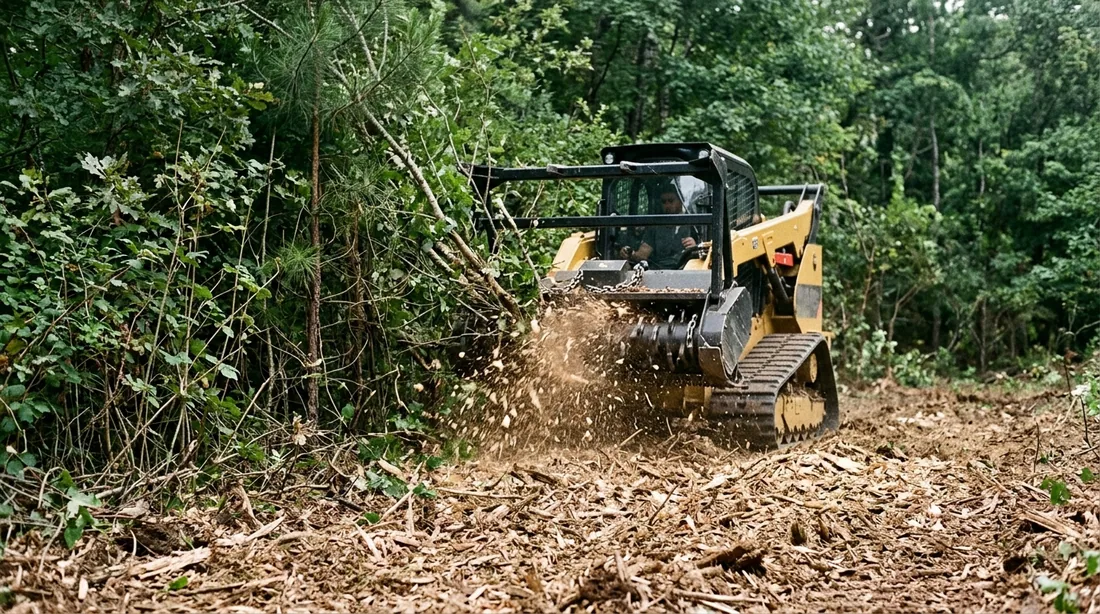
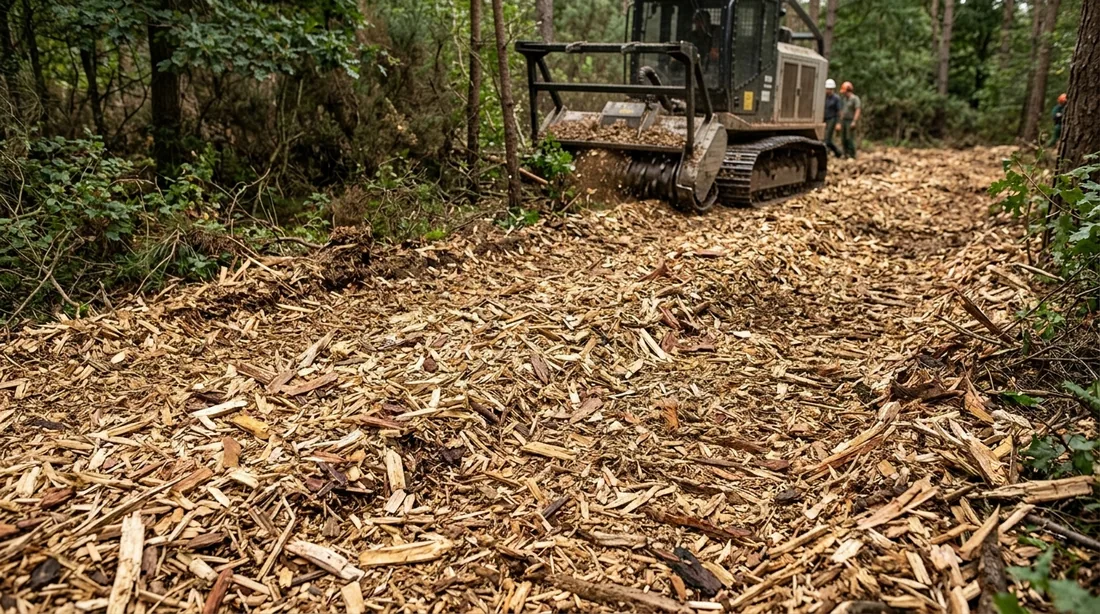
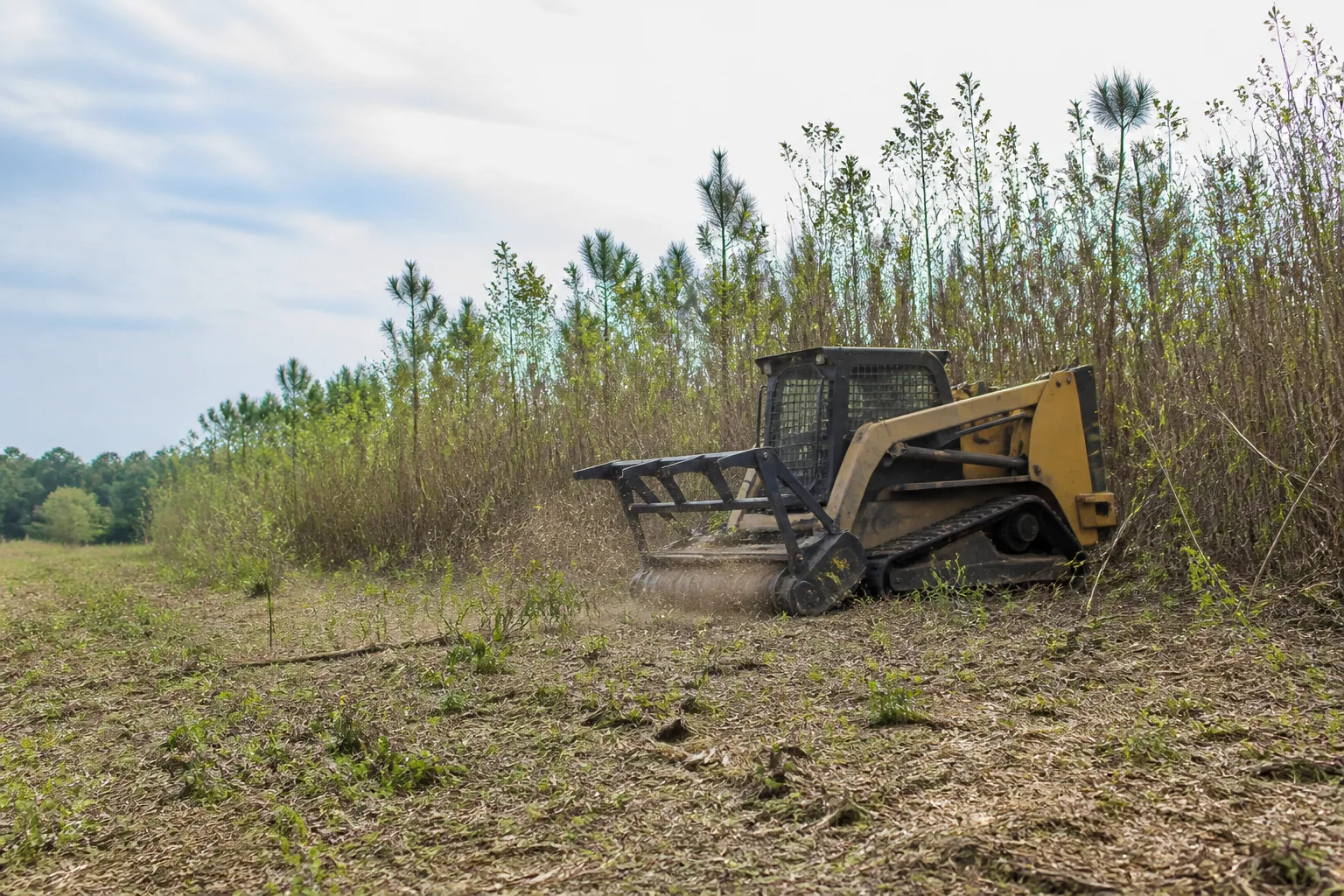
We clear brush, saplings and undergrowth with a mulching head and leave the material on the ground as chip. One machine, one pass, no burn piles and no hauling — which is why it costs less than conventional clearing. We work across Fayetteville and the towns around it.
You have land you cannot use. It has grown in to the point where you cannot walk it, let alone run stock or plant it, and conventional clearing means burn piles, haul-off and a churned-up site to put back together afterwards. What you want is the ground usable and the topsoil left where it is. You want somebody who turns up, tells you straight what it needs, and does it properly the first time. The typical Fayetteville property dates to around 1983, so the housing stock here is mostly seventies and eighties. At roughly 46 inches of rain a year, damp is usually somewhere in the story.
We come and look at what you actually have, and measure it, rather than pricing it off a photograph you sent.
It says what is included and what is not, which is the only way to hold two quotes side by side and read them honestly.
If this can wait a season, we will say so. If it is worse than you thought, you will hear that from us first.
You might know this as land clearing. Same work, either name. Everything below is work we handle directly, not passed to a third party.

Stems from grass height up to roughly eight inches in diameter go down in one pass, with the chips spread across the ground where the material stood.

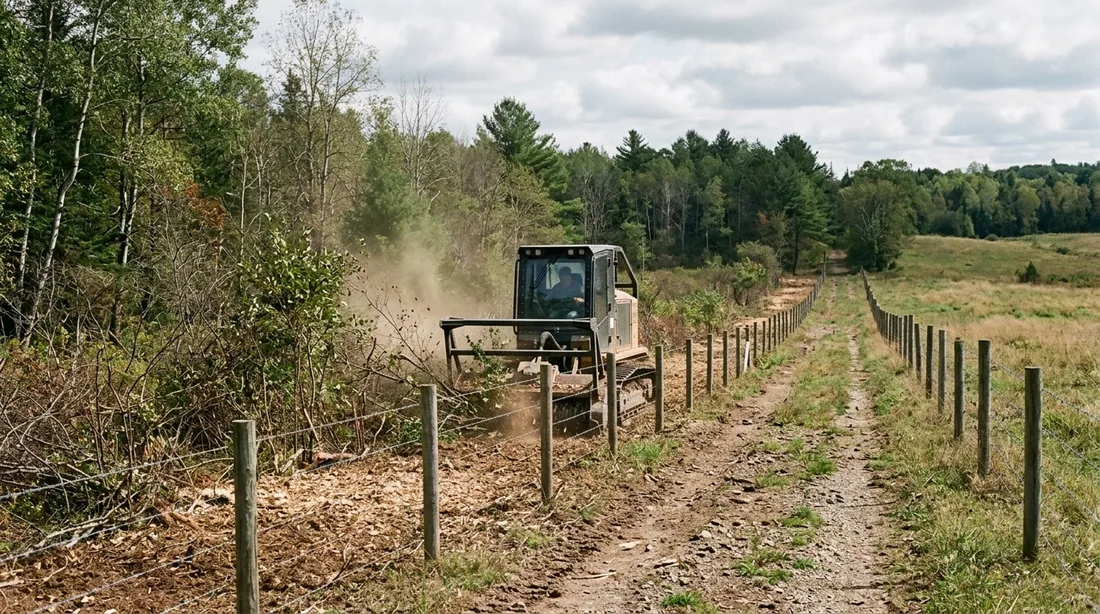
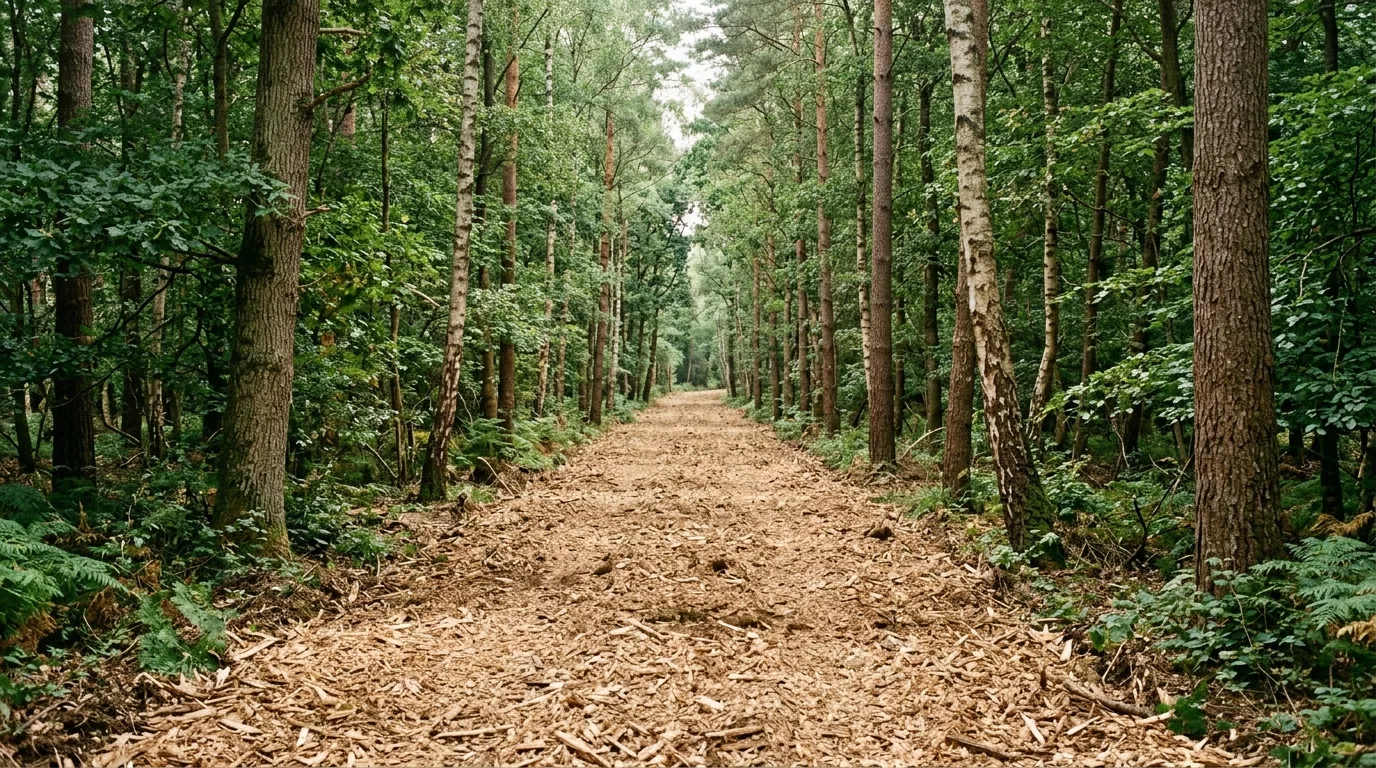
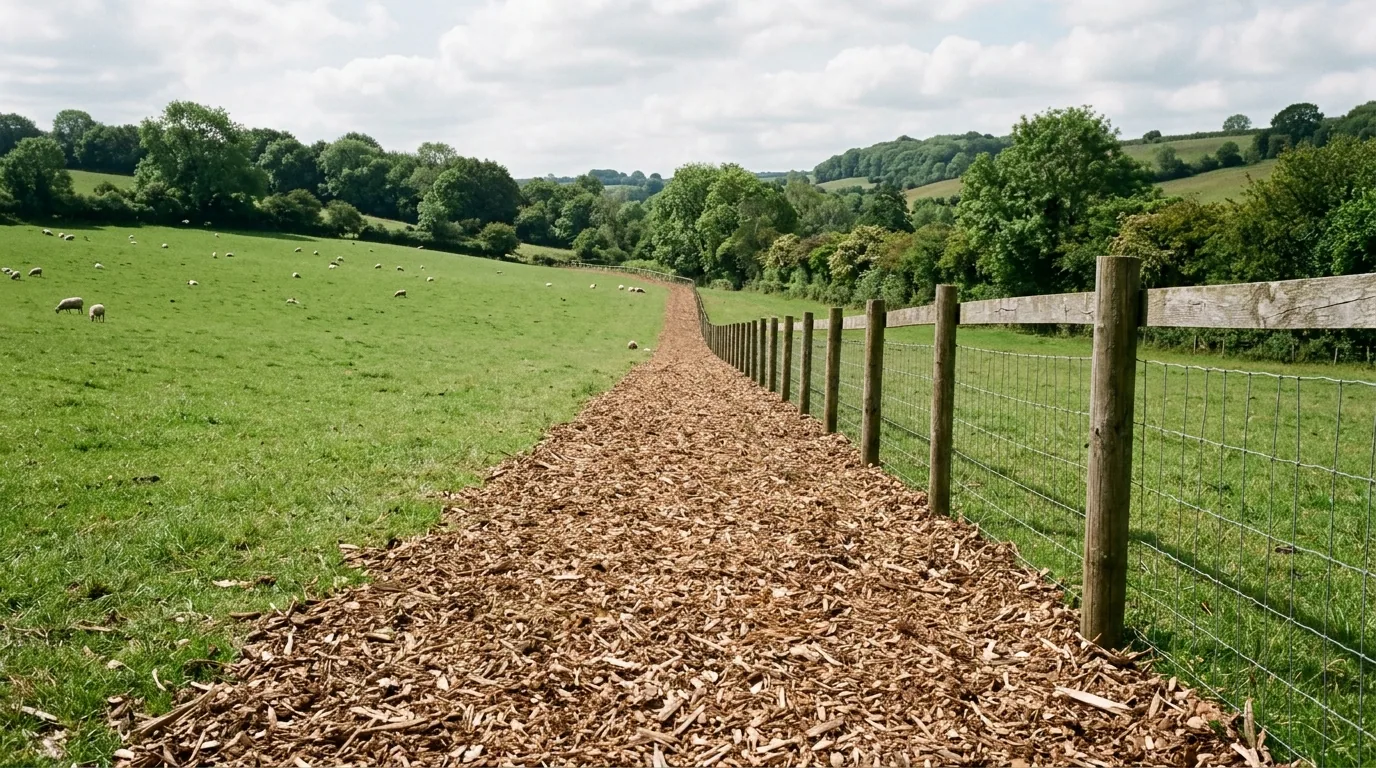
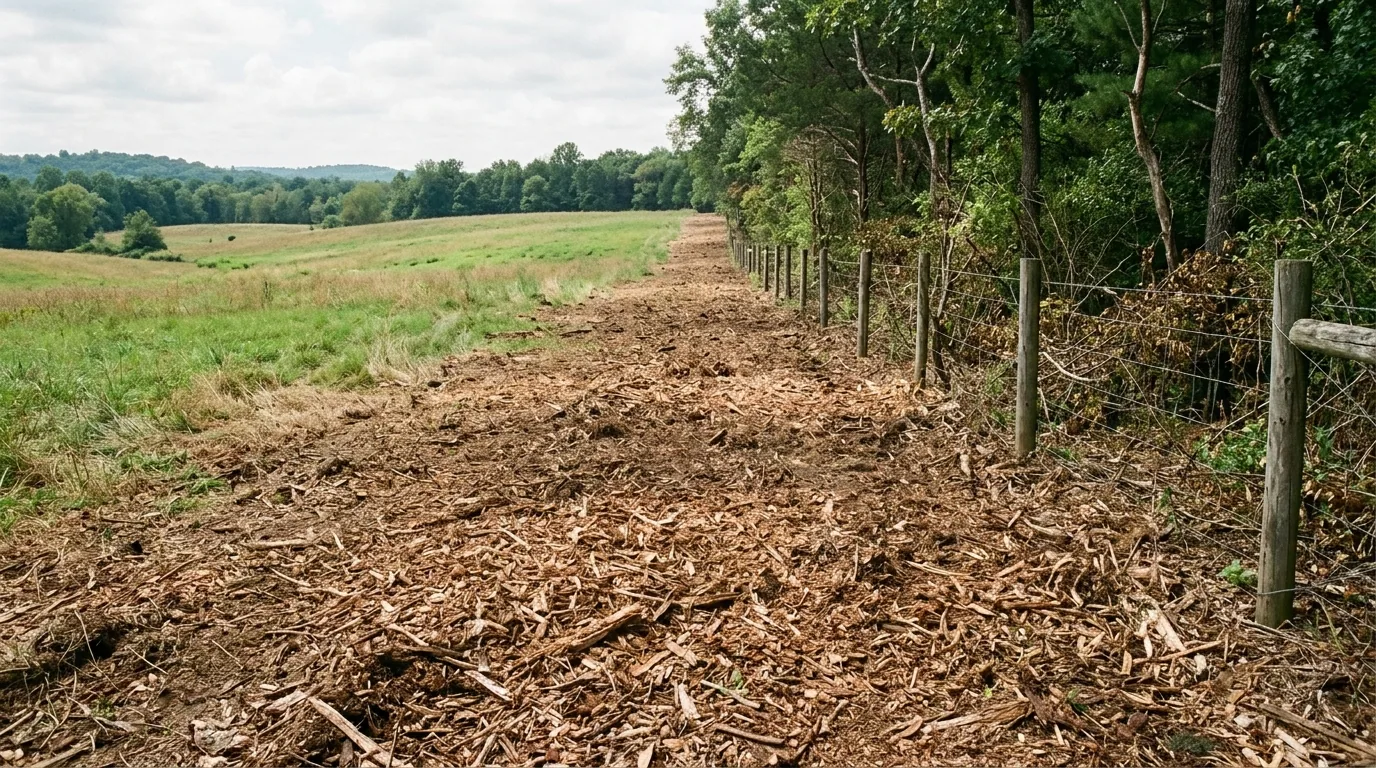
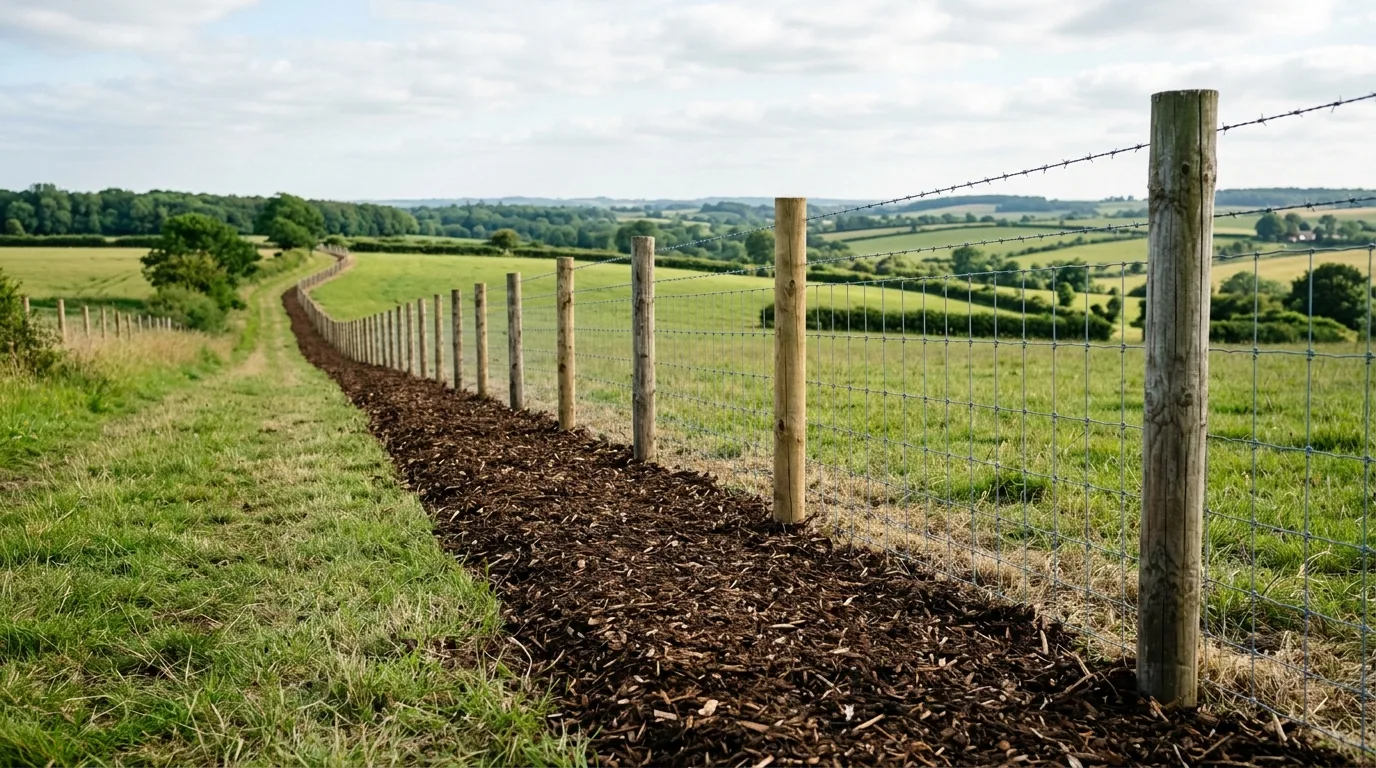
Narrow strips along fences, property lines, and access roads. These are usually billed hourly rather than per acre because the machine repositions constantly.

Privet, honeysuckle, autumn olive, and multiflora rose ground down to the soil surface. Root crowns survive the pass, so regrowth is expected without herbicide follow-up.

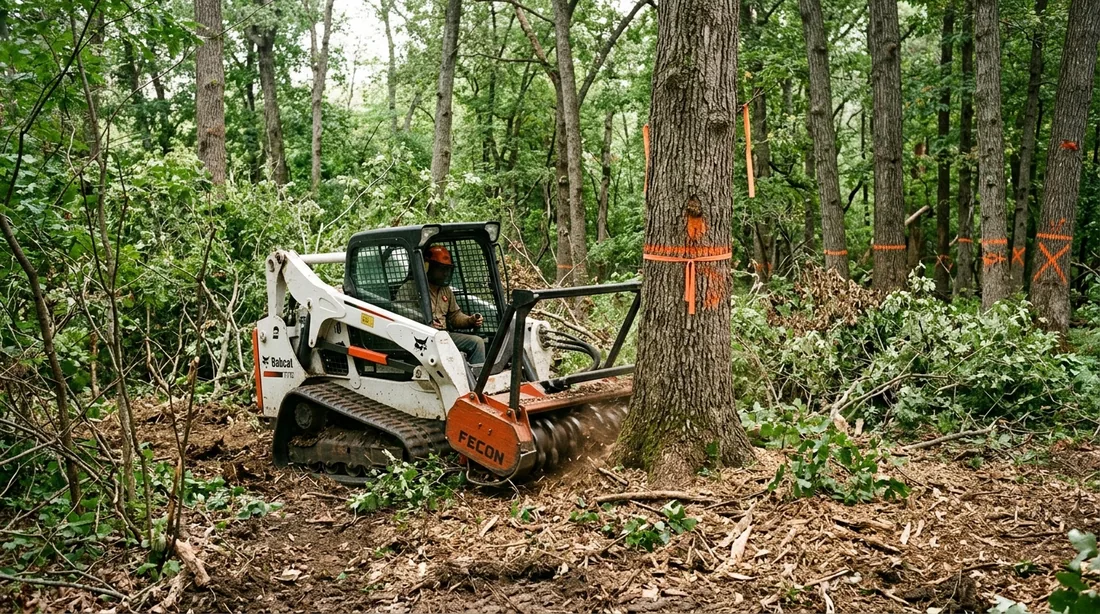
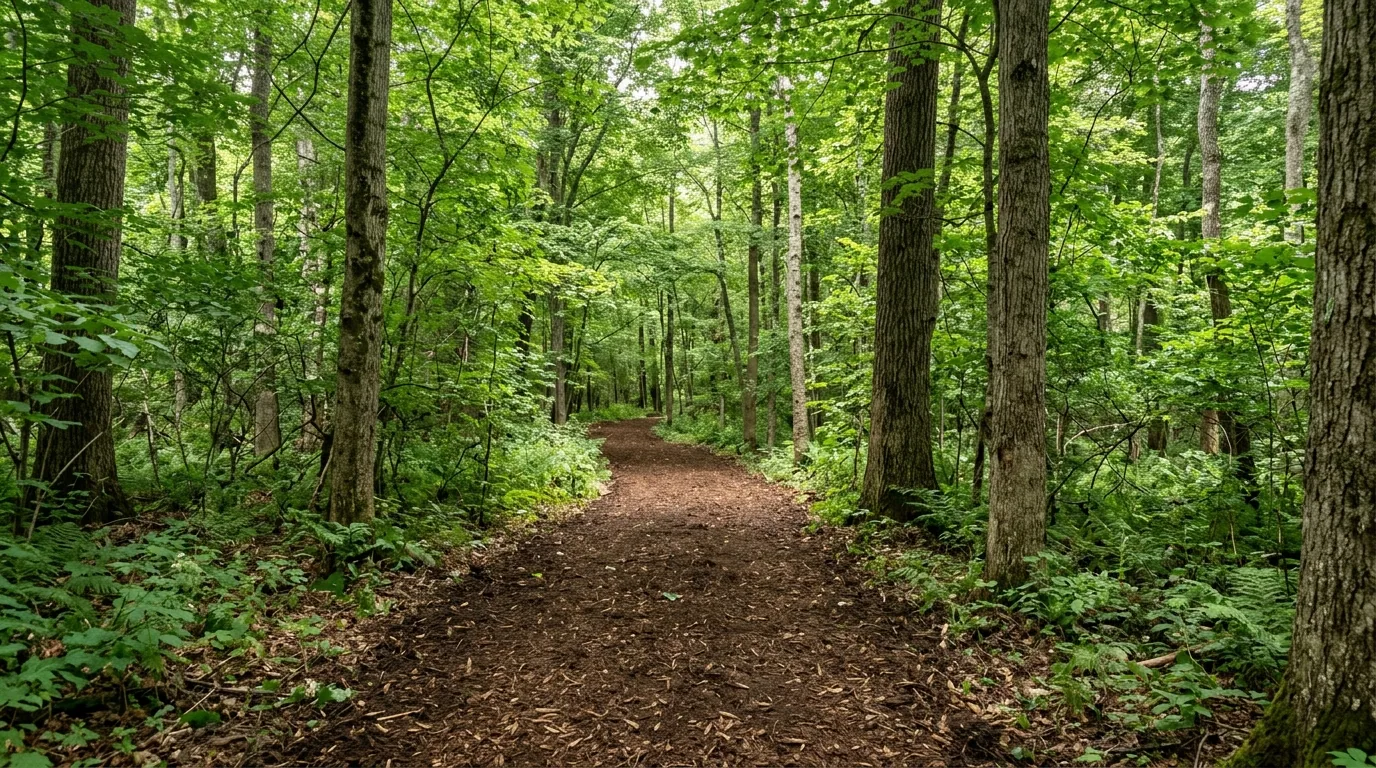
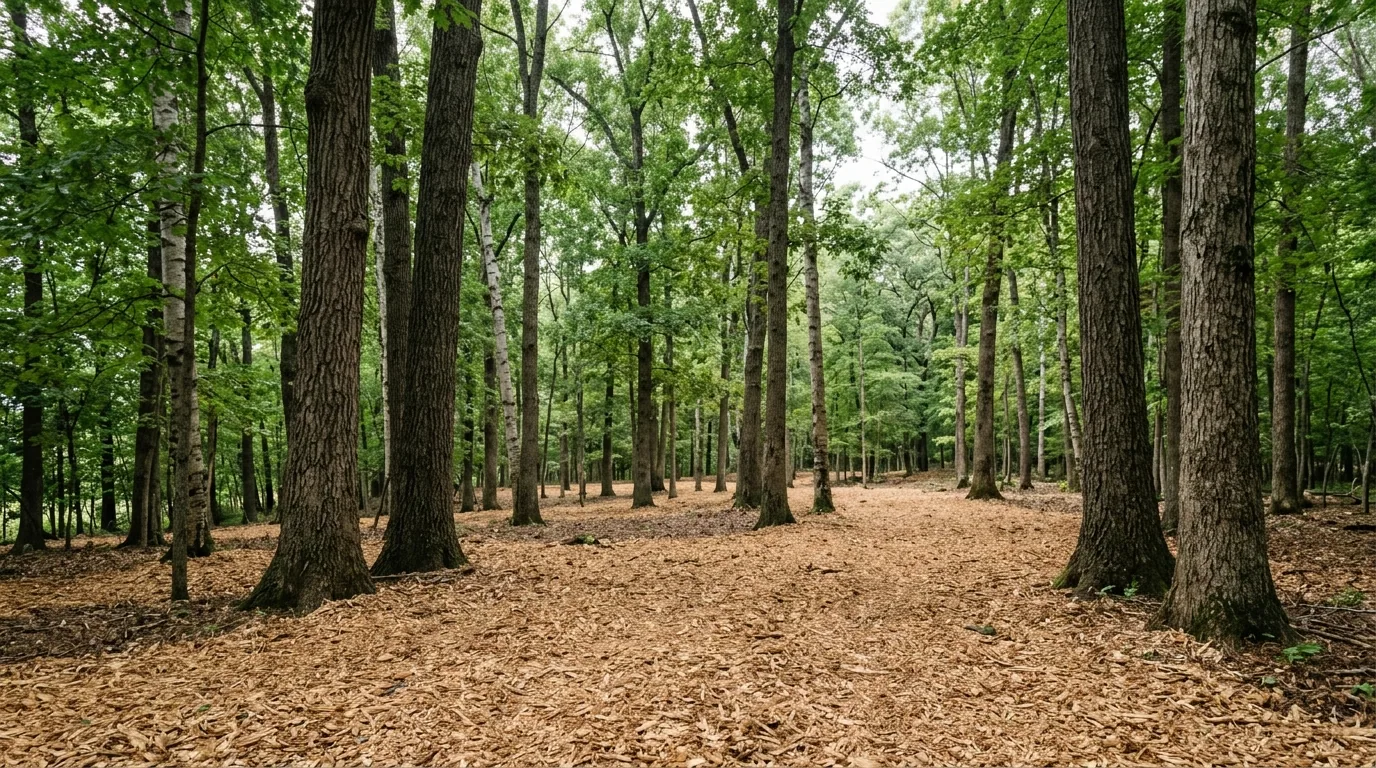
Marked keeper trees stay standing while everything beneath them is removed. This costs more per acre than a full clear because the operator works around obstacles.

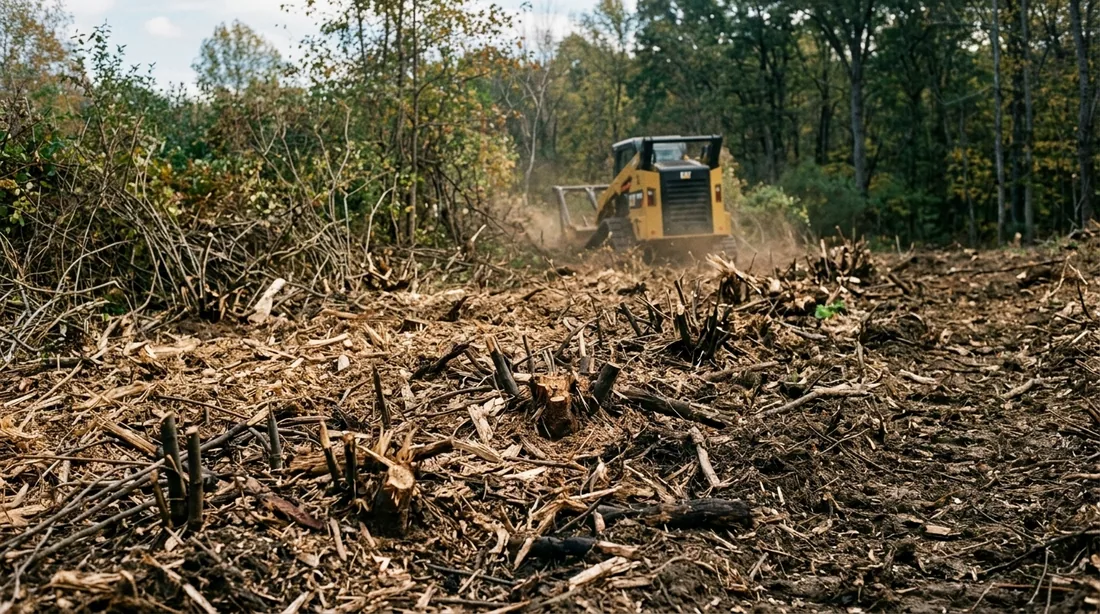
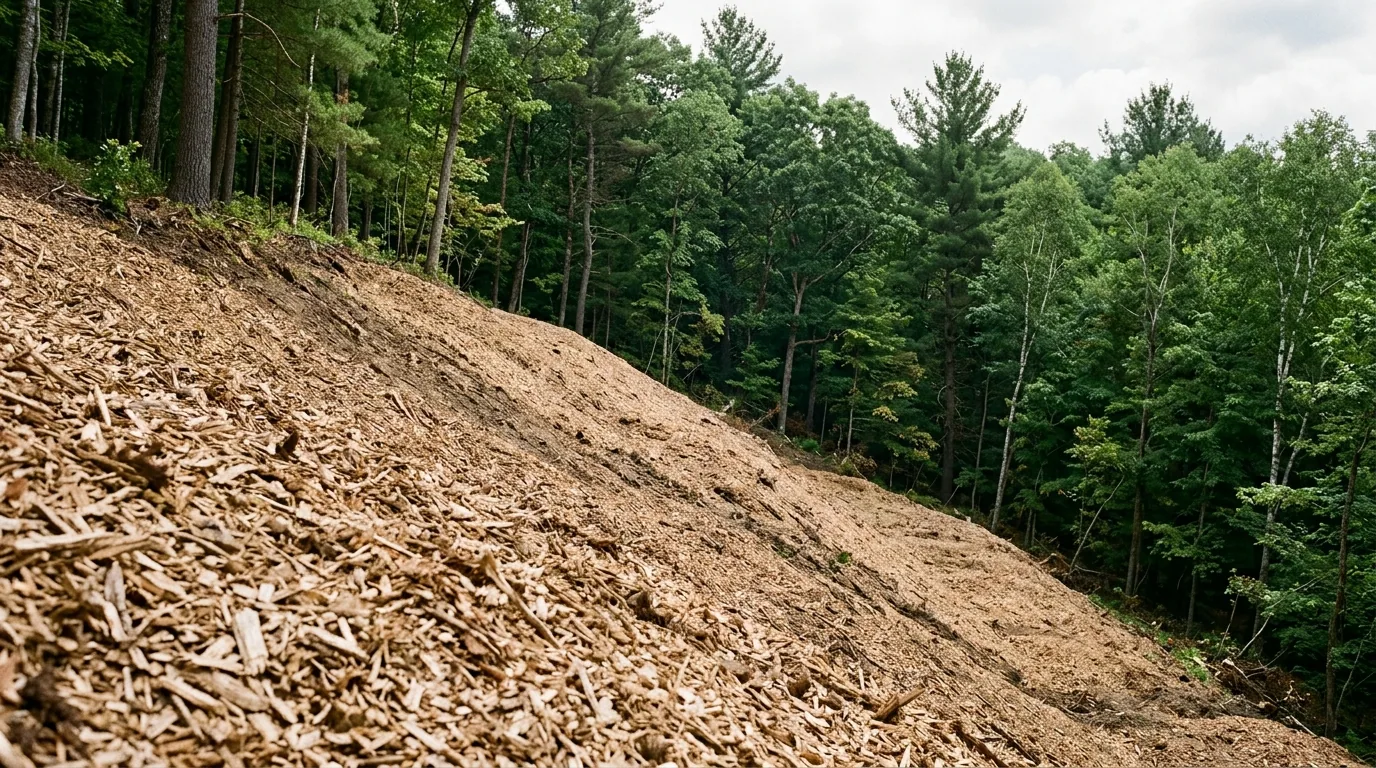
Chips remain on the ground as erosion cover and break down over one to three seasons. No burn piles, no dump trailers, no landfill charges.
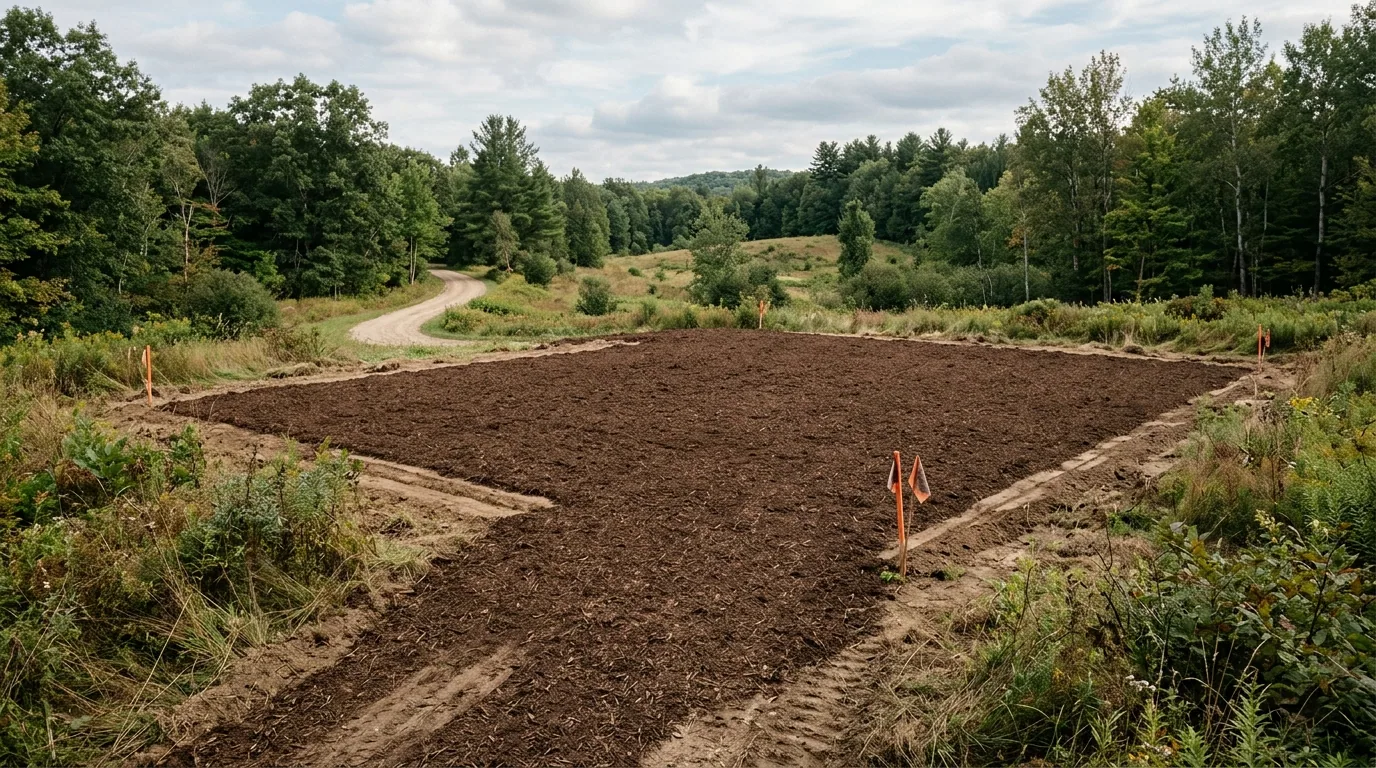
A cross-section of the jobs we handle around Fayetteville — different sizes, different conditions, same standard.


We work Fayetteville and the towns around it every week. We also cover Spring Lake, Anderson Creek, Eastover, Spout Springs, Hope Mills, Rockfish, Vander and Wade. We know what the buildings here are like and how they age.
The crew on your job is licensed, insured, and on our books – we do not hand your work to a subcontractor and hope.
We do forestry mulching specifically. It is not an add-on to a general contracting business. The operator should walk or drive the property lines with you before quoting. Mulching the neighbor's brush by mistake is a real and expensive problem on unmarked rural lots.
You get the number before the work starts, and it does not move unless something is found that changes the job – which we show you first.
Anything to do with forestry mulching. To start with: standing brush and saplings, fence lines and trail corridors, invasive brush knockdown, selective thinning, mulch mat left in place. If you need something that is not on that list, call and ask – we can usually quote it or tell you honestly who should.
We cover Fayetteville, NC and the surrounding towns – Spring Lake, Anderson Creek, Eastover, Spout Springs, Hope Mills, Rockfish, Vander, Wade, Silver City, Dundarrach, Parkton, Lumber Bridge, Five Points, Lillington, Bunnlevel, Mamers, Barbecue, Erwin, Raeford, Red Springs, Vass, Bowmore, Ashley Heights, Stedman, and more. If you do not see your town listed, call anyway and we will tell you straight whether we can get to you.
Standing brush and saplings – Stems from grass height up to roughly eight inches in diameter go down in one pass, with the chips spread across the ground where the material stood.; Fence lines and trail corridors – Narrow strips along fences, property lines, and access roads. These are usually billed hourly rather than per acre because the machine repositions constantly.; Invasive brush knockdown – Privet, honeysuckle, autumn olive, and multiflora rose ground down to the soil surface. Root crowns survive the pass, so regrowth is expected without herbicide follow-up.. Which one is right depends on what we find when we look at it, and we will walk you through the trade-offs rather than picking for you.
Standing brush and saplings is the one we are asked about most often in Fayetteville. Stems from grass height up to roughly eight inches in diameter go down in one pass, with the chips spread across the ground where the material stood.
Most jobs land between $200 and $15,000 per project, mulched in place with no haul-off, depending on condition and scope. We come out, look at it, and give you a written estimate at no charge. We are not the cheapest outfit in Fayetteville and we will not pretend to be – but you will know exactly what you are paying for before anything starts.
Stem size and density: Grass and light brush move fast. A stand of six-inch hardwood saplings can cut production to a quarter of that. Published hourly rates run $125 to $200 for underbrush and $200 to $400 for heavy dense brush. That is usually the biggest single swing in a quote, which is why we look before we price.
Yes. We stand behind what we do and we put the terms in writing with the estimate, so the guarantee is not a handshake you have to remember later.
Call us at (910) 912-1740, or fill in the quote form on this page. We will get back to you, set a time that suits, and come look at the job.
Free estimate, in writing, from a Fayetteville team that does this every day.
Call us whenever suits. We handle every size of job, residential and commercial, across Fayetteville and the towns around it.
Your partner,
Fayetteville Forestry Mulching